When the Glove Changed the Save
The goalkeeper glove did more than protect the hand.
Built from one overlooked detail in the 1970 World Cup Final—the goalkeeper was still bare-handed—this speculative campaign explores how modern gloves changed the technique, risk and psychology of the save.
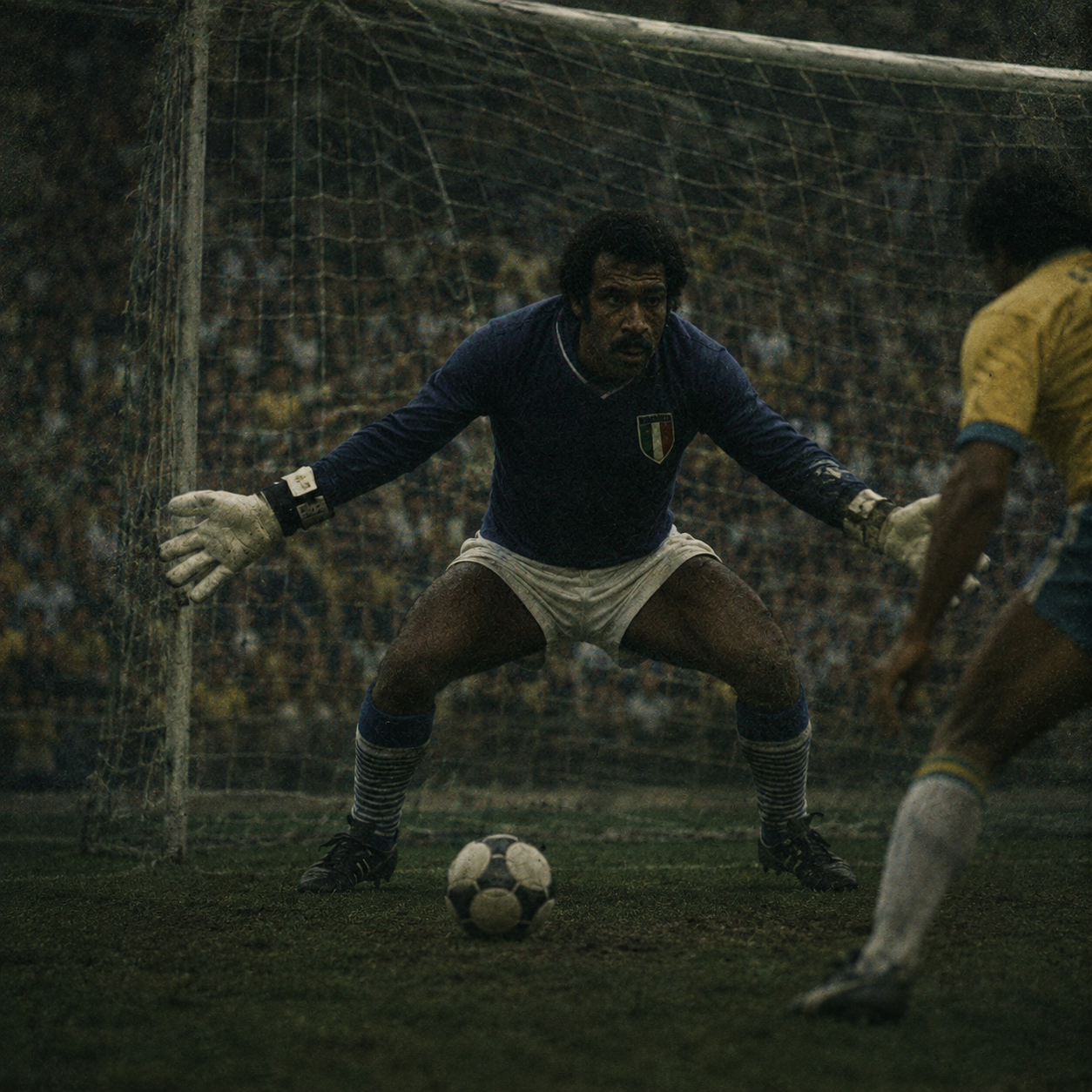
When the Glove Changed the Save is a GK Visuals creative strategy case study and spec commercial treatment built around a simple historical contrast: in the 1970 World Cup Final, goalkeepers were visually distinguished by long-sleeved jerseys, yet still played bare-handed.
That contrast led to a larger question:
How did goalkeeper gloves change the goalkeeper’s relationship to the ball?
The insight was that goalkeeper gloves did more than protect the hand. They changed behavior. They enabled greater control, encouraged different techniques, reduced perceived risk, and helped shift the position from survival-first reactions toward command and possession.
Before the modern glove, many saves carried a different risk profile. Goalkeepers often protected themselves, parried away danger, or attacked the ball with survival-first technique. With the evolution of grip, padding, and confidence, the save became less about surviving contact and more about controlling it.
This speculative commercial platform reframes goalkeeper gloves as more than product innovation. They become the visual symbol of a positional evolution — from reactive to commanding, from deflection to possession, from survival to smother.